
Differentiation Examples That Actually Work in Real Classrooms
It’s time for another round of real talk.
Whether it was in your credentialing courses, your teacher induction program, or one of the innumerable professional development seminars you’ve attended, you’ve likely been told to differentiate your instruction. You may have even received some strategies for doing so, and these differentiation examples probably sound great. In theory.
After all, our classrooms are filled with diverse learners who have their own unique interests, needs, backgrounds, and strengths. Personalizing our instruction to meet those varying needs is inevitably more effective than a one-size-fits-all curriculum.
But, in our experience, no one has ever explained how to provide differentiated instruction in real classrooms without losing our sanity.
According to Renzulli and Tomlinson, the concept of differentiated instruction “suggests that students can be provided with materials and work of varied levels of difficulty, different levels of assistance, various types of grouping, as well as different environments in the classroom.”

This feels utterly impossible, especially at the secondary level.
Most secondary teachers we know teach at least two different courses (often more). It takes far more than 40 hours a week to design, deliver, and evaluate effective and engaging unit plans for these courses. Add to that nearly 200 students per teacher, and the idea of personalized materials, work, assistance, grouping, and environments for each student becomes truly impossible.
There’s also the fairness problem. Teenagers are profoundly concerned with the idea of what’s fair. When we provide legally mandated accommodations to our students with Individualized Education Plans (IEPs), other students notice, no matter how discreet we try to be. There wasn’t a single year when we didn’t hear at least one chorus of, “Why does she get that, and I don’t?”
Differentiation examples from researchers who haven’t taught a full load in years create a tension between theory and practice that every teacher struggles with, no matter how long they’ve been in the classroom. For us, the most manageable way to resolve that tension was to stop trying to create different assignments for different students and instead focus on creating assignments with universal scaffolding that allowed all our students to be successful at rigorous, grade-appropriate tasks.
Why Traditional Differentiation Creates More Problems Than It Solves
Some teachers have shared successful differentiation examples, and there are contexts where it’s easier to offer differentiated instruction. For example, when we switched to a flipped classroom model, we could provide more optional scaffolds and room for choice. Steph now teaches AP Seminar and AP Research online, and the project-based courses offer ample opportunities for student choice, differing levels of support and difficulty, and personalized feedback.
But many of us are not in circumstances that lend themselves well to true differentiation, which creates four key problems.
The Time Problem
We have limited time and a host of unreasonable expectations. Creating meaningful multiple tracks for students of different levels adds to this burden. High school bell schedules also leave little room for individual one-on-one support.
The Fairness Problem
Our classrooms are full of human beings who all want to make sure they’re getting their version of “fair.”
When one student gets to take a quiz with reduced answer choices, the student sitting next to them doesn’t want to hear about the concept of leveling the playing field. They want the “easier” quiz.

When AP students are competing for valedictorian and admission to elite colleges, they’ll start a riot if they find out that some classmates were scored on a different rubric.
In a shared space like a classroom, it can be difficult to treat students differently in a way that is not perceived as blatantly unfair.
The Tracking Problem
Providing different assignments for different groups of students also creates different expectations, even when we try to keep things fair.
When we first started teaching AP Lit, we assigned novels without guided reading questions. Students’ understanding was so superficial that they couldn’t engage in meaningful discussion. Once we added guided reading questions for everyone, the quality of discussion improved dramatically. If we had only given questions to students who “needed them,” we would have created both unfair workloads and grading challenges.
Another common approach to differentiating instruction involves offering advanced students “enriched” assignments. But to the advanced student, this can feel like punishment: they have to do “extra” or “harder” work on their own while the teacher is busy helping everyone else complete simpler assignments.
The Implementation Problem
In a real classroom with real students, you don’t always have control of who gets access to differentiated materials and supports, which can undermine our efforts to personalize instruction. It’s easy for a student to lend their graphic novel version of a text to the advanced student next to them who has a soccer game that day and doesn’t have time to read the original.
Traditional differentiation assumes you can manage multiple parallel curricula while maintaining fairness and preventing resource sharing. Real classrooms with real teenagers don’t work that way. Most students—including advanced ones—actually benefit from well-designed scaffolding, so we developed a different approach entirely.
Our Alternative: Universal Scaffolding That Actually Works
Rather than creating multiple assignments for varying levels of students, we decided to invest our time and energy in designing one well-scaffolded assignment that works for everyone.
Essentially, rather than lowering the bar for students who couldn’t reach it or creating multiple bars for students of different levels, we made every effort to build better ladders so that everyone could reach the same bar.
This approach to scaffolding instruction allows us to maintain the same expectations for all our students while removing barriers—without the complexity of traditional differentiation or the multiple-pathway requirements of Universal Design for Learning (UDL).
Essential to our approach to scaffolding instruction? Backwards lesson design.
For every unit (and even assignment), we start with our end goal, whether that is a content standard or the final project or assessment students will complete. We identify potential barriers to success on the task—skills our students haven’t yet developed, background knowledge they’ll need, steps they’ll need to take, and key parts of the text they’ll need to understand. Then, we build in supports that will be available to everyone—guided reading questions, sentence starters, prewriting activities, and plenty of opportunities for feedback and revision.
Once we have a rough idea of the steps we’ll need to guide our students through, we start creating the individual pieces of the unit. As each of us works individually on a piece of the unit, we try to anticipate how students might misunderstand, misread, or misinterpret the text or our questions. Then, we build in scaffolds to address those potential problems—we add definitions and videos, specify exactly how we want students to respond, and break each task down into small steps.
Then, we switch. Each of us reads the other’s work with “student eyes,” looking for additional places to simplify, clarify, and anticipate confusion. By intentionally reviewing each other’s work with a mind to how students might do it wrong, we’re better able to build in guardrails that keep them on the right track.
This is an essential step, even when you’re not building a unit from scratch. When we use an existing unit plan, we still read through it with student eyes, looking for places where we’ll need to supplement with additional activities or clarify instructions. We’re fortunate to have each other for this process, but you can absolutely do it on your own—start by asking yourself, “How might students misunderstand this?” and build in supports proactively. You’ll get better at it over time.
So, what does this look like in practice? Let’s dive into an example from one of those universally challenging authors we all encounter: Shakespeare.
Universal Scaffolding in Action: Shakespeare for Everyone
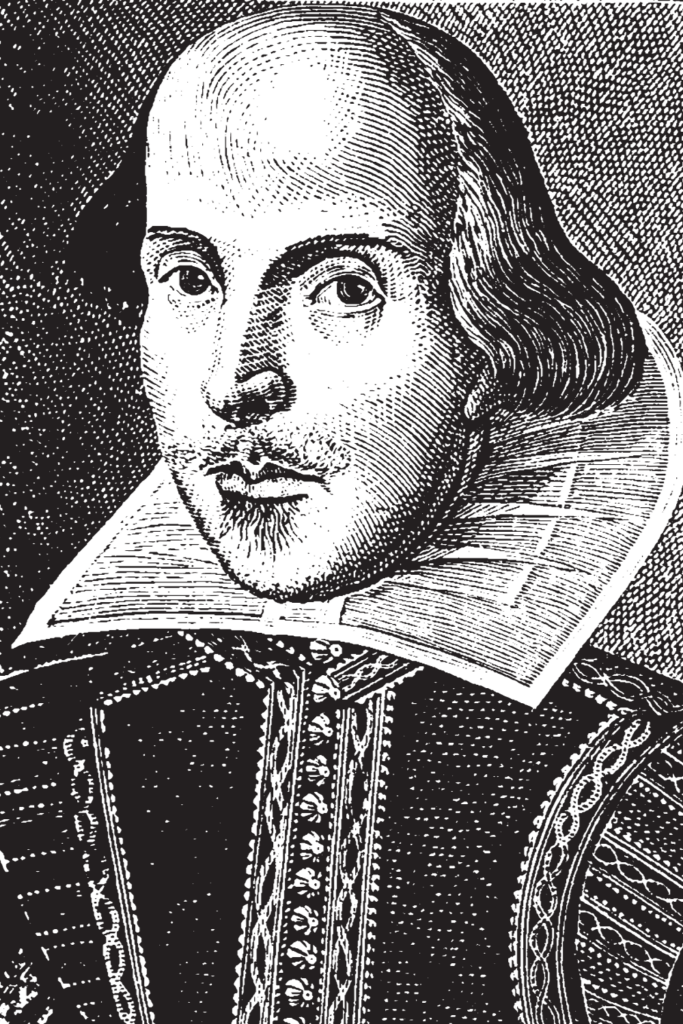
Shakespeare’s plays are particularly challenging to teach: they assume cultural knowledge and language familiarity that most students lack. It takes significant work to make the text accessible for struggling readers, but even our strongest readers need support.
One approach to differentiation is assigning different Shakespeare texts to different students: No Fear for struggling students, original for advanced. This creates obvious tracking and fairness problems. Instead, we assigned everyone the same text with embedded supports.
Actively Learn Setup
We used Actively Learn to embed supports directly into Shakespeare texts for all students. We chunked reading by acts, added definitions and visual aids (like the Colossus statue image for Julius Caesar), included video clips of performances, and most importantly, embedded questions throughout the text that guided understanding rather than testing it afterward.
Question Design That Scaffolds
We write our own questions, placing them strategically where students might misunderstand the text. Here’s an example from Julius Caesar, Act 1, Scene 3:
Cassius says that for their plan to go forward, they will need Brutus’s help because “His noble name would make the deed seem just and honorable in all men’s eyes” (57).
Choose the answer that best paraphrases this quotation. Remember, when you paraphrase, you are saying the same thing but in different words.
[Hint: To fully understand this quotation, you will probably want to look up “noble,” “deed,” “just,” and “honorable.”]
- His royal name will make everyone think that he deserves the deed (def: document showing who owns land or a building) to the city of Rome.
- His good reputation will make everyone think the murder was the right thing to do.
- His name will make everyone think the murderer should be brought to justice.
- His high-ranking name will make the action seem unfair to everyone in Rome.
The question helps students clarify their understanding of a key point while focusing on choosing the correct definition of words with multiple meanings. It also directs our students to parts of the text that will be essential to their final project—in this case, a business letter to a historian arguing whether Brutus should be remembered as “the noblest Roman of them all” or a traitor to the Roman republic.
When students started their final projects, they actually understood key plot points and character motivations, rather than being confused or having skipped the reading entirely.
The Revision Process
Finally, students revised responses that scored below proficient using feedback and screencasts we created for commonly missed questions.
You can use a similar approach even without access to Actively Learn. Our units, like those for Julius Caesar and Romeo and Juliet, include questions that guide students through the text and align with the final task (and they’re editable, allowing you to add line numbers and the specific instructions your students need). The comment function in Google Docs allows for feedback and revision.
This approach worked across all our classes, but implementing it successfully requires understanding what students actually need versus what theory suggests they should want.
The Results: Why This Approach Actually Works
When we started implementing our own approach to differentiated learning, we saw improvements in all our students.
Our students’ responses were more accurate, complete, and analytical. Struggling students could participate meaningfully, while higher-achieving students appreciated clear expectations for quality responses.

Even better, some of our more advanced students actually transferred the skills they learned through our scaffolds to other classes. After enduring months of explicit and repeated instruction about how to integrate, punctuate, and cite quotations correctly, our 9th-grade honors students could integrate textual evidence so smoothly that their 10th-grade honors teacher went out of her way to tell us. Steph’s AP Seminar students share success stories of using the paragraph formats she provides to write high-scoring essays in their other classes.
Internalizing scaffolds is always the goal, and while some students may not reach that point within the single year we have them, some will. In the meantime, everyone else is better able to complete grade-level work.
We’ve heard objections: “What about gifted students?” and “Isn’t this teaching to the lowest level?” But maintaining task rigor while providing clear expectations actually enabled rich learning for everyone. It also freed us to offer more individualized support—stronger students worked independently while we helped those still struggling.
We set out to find a time-saving alternative to traditional differentiation and ended up achieving the personalized learning that theory recommends—just through a more practical approach.
How to Apply This in Your Own Classroom
If you’re looking for differentiation examples that will work in real classrooms like yours, here are some practical tips to help you get started.
Better Design, Not More Options
Real classrooms are complex, and while we need to acknowledge that our students have different needs, we can do this by removing obstacles from the same path instead of creating different paths for each student.
Starting with universal scaffolding instead of traditional differentiation examples is more practical for teachers and more equitable for students. It eliminates the fairness problems and time constraints that make traditional differentiation so difficult to implement. Ultimately, it leads to better-designed assignments that work for everyone.
If you’d like to see our philosophy in practice, our Julius Caesar, Romeo and Juliet, and Odyssey units all employ the universal scaffolding approach we’ve described here. They also all include materials for standard-level and PreAP/Honors students, allowing you to see how we differentiate similar tasks for different courses.


