Modern Books for AP Literature: 22 Fresh Ideas for Independent Reading
Finding the right books for AP Literature independent reading is tricky. You want students reading texts they can use for the open prompt (Q3) on the exam, but let’s be honest: most students don’t want to wade through classics. Even if they do, they often struggle to understand the classics well enough to write about them without teacher support. On the flip side, the books students do want to read—the latest YA hit or viral BookTok romance or thriller—rarely have the literary depth worthy of sustained analysis.
That’s where this list comes in.
We’ve recommended contemporary books for AP Literature before, a post that continues to be one of our most popular resources (turns out teachers are hungry for fresh, engaging AP-appropriate texts). We’ve also shared modern books that diversify the canon that would work as full-class or independent reads, and if reluctant readers are your priority, 6 AP Lit Books That Won’t Bore Your Students to Tears is worth a look too. But this list is different. These 22 novels are all published in the 2000s, and nearly all within the last couple of years. They’re current, tackling topics and concerns that feel urgent and relevant to students living through 2020s. If you’re just getting started building an independent reading list and want our original core picks first, that 2023 post is still a solid jumping-off point—come back here once you’re ready to go deeper.
What we love most about these books is that they function as both mirrors and windows: students can see themselves reflected in stories about identity, displacement, grief, and resilience, while also gaining windows into cultures, historical events, and experiences far from their own. Reading these novels, we learned about the Siege of Leningrad, the Nigerian Civil War, the 1834 “apprenticeship” system after slavery’s abolition in the Caribbean, Native American boarding schools, and so much more.
Are all of these books “of literary merit” in the traditional sense? Maybe not. But they’re sophisticated adult novels that move well beyond YA and gently push students toward the kind of complex, layered texts they’ll encounter in college. They offer genuine opportunities for literary analysis—rich symbolism, innovative structures, multiple perspectives, intertextual connections—while still being accessible and genuinely interesting to read.
An important note: These books are written for adults, which means they include profanity, sexual content, and references to drinking and drugs. We’ve called out particularly important content warnings in each entry, but you won’t find any of these books completely free of mature content. That’s exactly why we’re recommending them for independent reading rather than whole-class instruction. Know your community, and if you’re unsure about a particular book, pre-read it before handing it to students.
6 Novels That Explore Identity and Cultural Heritage
Half of a Yellow Sun by Chimamanda Ngozi Adichie (2007)
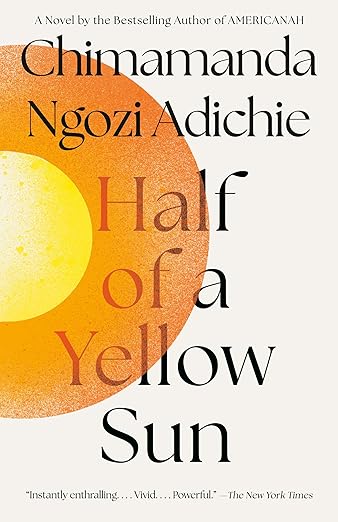
This sweeping novel follows three characters in 1960s Nigeria during the Nigerian Civil War (1967–1970). Ugwu, a teenage houseboy from an impoverished village, works for Odenigbo, a university professor full of revolutionary ideals. Olanna, Odenigbo’s girlfriend, has abandoned her wealthy life in Lagos to be with him. Richard, a shy English writer, falls in love with Olanna’s enigmatic twin sister Kainene while researching Igbo-Ukwu art.
When ethnic tensions between the Hausa and Igbo people explode into violence and the region declares independence as Biafra, the characters are swept into war, experiencing devastating losses, betrayals, and starvation as blockades slowly strangle Biafra.
Adichie’s masterful storytelling humanizes this often-overlooked conflict while exploring colonialism’s lasting impact and how class shapes experience during war. The shifting viewpoints offer rich material for analyzing how perspective shapes narrative and character development. It’s frequently taught in AP classrooms and recommended for students interested in African literature or historical fiction that doesn’t shy away from difficult truths. Content warnings: violence (including graphic massacre scenes) and sexual content.
James by Percival Everett (2024)
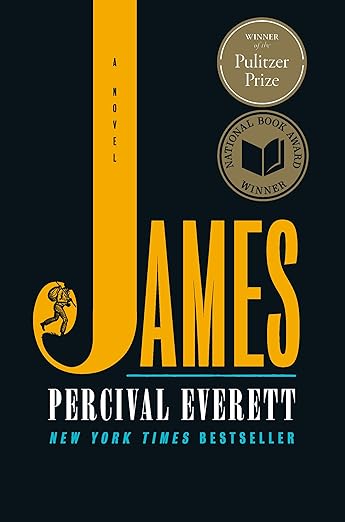
Everett’s Pulitzer Prize-winning retelling of The Adventures of Huckleberry Finn from Jim’s perspective offers a powerful reexamination of one of American literature’s most controversial classics. We’ve seen it discussed frequently in AP Lit Facebook groups; Steph saw a teacher reading it during lunch at the AP scoring. Everett gives Jim the humanity, agency, and interior life that Twain’s original denied him, revealing the intelligence required to survive as an enslaved person while exposing the moral complicity of even “good” white people in upholding slavery.
The novel brilliantly shows how language functions as both survival tool and weapon. Jim and other enslaved characters code-switch strategically, playing into white expectations while planning their paths to freedom. Where Twain treats slavery as a backdrop for lighthearted adventure, Everett foregrounds the constant, life-threatening danger Jim navigates.
This works especially well for AP students who’ve already read Huck Finn. It’s a natural entry point for discussing intertextuality and how contemporary authors engage with canonical texts (hello, Foster!). Students can analyze what Everett changes and why, making it accessible for Q3 responses even without class discussion. This could work as a full-class read, but be aware of heavy use of the n-word and a rape scene (not graphic but present).
The Lion Women of Tehran by Marjan Kamali (2024)
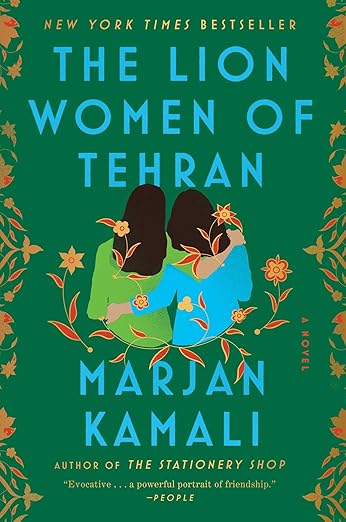
In 1950s Tehran, seven-year-old Ellie’s life shatters when her father dies and her mother moves them to a tiny home downtown. Desperate for connection, Ellie finds salvation when she meets Homa on her first day at school. Despite different social classes, the girls become inseparable, sharing dreams of becoming “lion women”—brave, fierce, and free.
When Ellie’s family regains wealth and she returns to her privileged world, Homa fades from memory. Years later, Homa reappears, and the two come of age against Iran’s volatile political landscape. As revolution builds and women’s rights hang in the balance, a devastating betrayal tests their friendship. The narrative alternates between 1950s–70s Tehran and present-day America, gradually revealing what drove these friends apart.
Compared to The Kite Runner and My Brilliant Friend, the novel intimately portrays a profound friendship tested by historical forces. The dual timeline creates natural opportunities for analyzing how personal relationships reflect larger political movements and how betrayal haunts across decades. Students interested in international literature or stories about female friendship will find this accessible, with enough depth for meaningful analysis. Be aware that it includes sexual assault, though these scenes serve serious themes rather than being gratuitous.
The Only Good Indians by Stephen Graham Jones (2021)
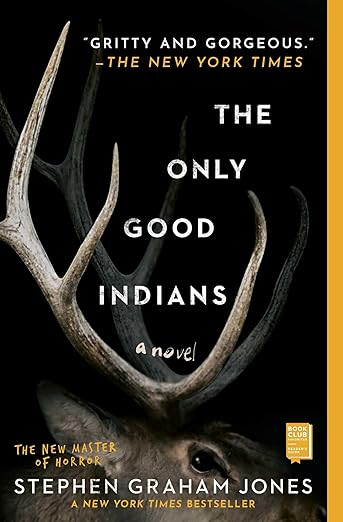
We saw this recommended in an online AP Lit community for students who like horror—a popular genre rarely found on AP reading lists. After checking it out, we decided it’s an excellent choice for independent reading or book clubs.
Ricky, Lewis, Gabe, and Cassidy grew up together on the Blackfeet reservation. Through flashbacks, we learn about a grisly hunting trip where they killed nine elk on land reserved for Elders, including a pregnant young elk. Years later, Ricky is killed in a bar parking lot in North Dakota. While attributed to racial violence, hints suggest something else. We switch to Lewis’s perspective—married to a white woman, living off the reservation, wracked with guilt. He begins seeing an elk like the one he killed and a mysterious Elk Head Woman. Are they real or manifestations of his guilt? To Lewis, they’re real, and he believes he’s being hunted in revenge.
The novel’s shifting points of view and unreliable narration create rich opportunities for analyzing how perspective shapes truth. The title references a racial slur, offering powerful entry points for discussing cultural identity and assimilation. It’s ideal for students struggling with “boring” classics who need practice unpacking carefully-constructed literature. Content warnings: graphic violence and horror elements.
Real Americans by Rachel Khong (2024)
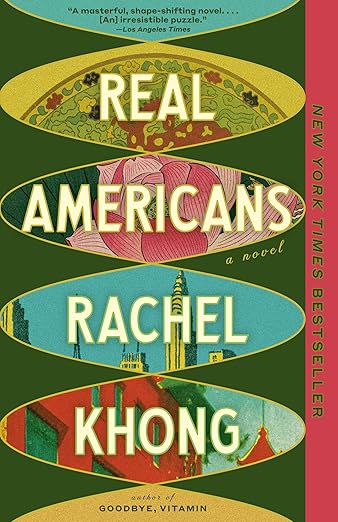
Khong’s multigenerational novel spans from 1960s China to 2030 America, exploring identity, destiny, and what it means to be “really” American. The story unfolds in three interconnected sections, each from a different family member’s perspective.
In 1999 New York, broke art history major Lily Chen meets Matthew, heir to a pharmaceutical empire. Despite vastly different backgrounds—her parents fled Mao’s Cultural Revolution, he’s wealthy East Coast elite—they fall in love. But their relationship becomes complicated by class, race, and family secrets.
In 2021, their teenage son Nick lives on an isolated Washington island with his mother, never having met his father. Suspecting she’s hiding something, Nick takes a DNA test to find his biological father, triggering revelations that raise more questions than answers. The final section reveals Nick’s grandmother May, a brilliant geneticist whose Cultural Revolution history and biotech work connect all three storylines.
The three-part structure offers opportunities to analyze shifting perspectives and how family secrets echo across generations. The novel explores genetic destiny versus free will and gene editing ethics, making it particularly relevant for science-minded students. Themes of Chinese-American identity and belonging will resonate with many readers. The novel includes sexual content and some violence.
There Are Rivers in the Sky by Elif Shafak (2024)
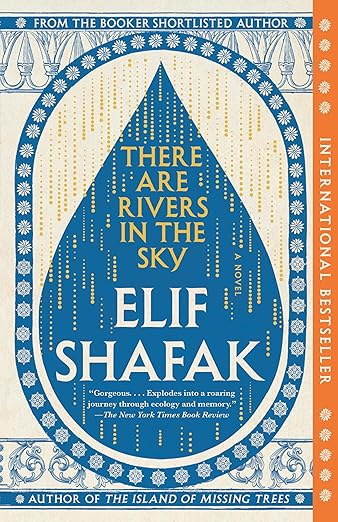
Shafak weaves three storylines across centuries, all connected by a single drop of water and the Epic of Gilgamesh. In 1840 London, Arthur Smyth is born into poverty on the Thames, his only escape his photographic memory. A book about ancient Nineveh ignites a passion that makes him a foremost Assyriologist, eventually deciphering the Epic of Gilgamesh for Western readers.
In 2014 Turkey, young Yazidi girl Narin waits for baptism in the River Tigris when ISIS violently interrupts. She and her grandmother flee across war-torn lands toward their people’s sacred valley. In 2018 London, hydrologist Zaleekah moves to a Thames houseboat after divorce, contemplating suicide until a book about her homeland reignites her purpose.
Arthur’s Victorian storyline is particularly compelling, but all three narratives explore exile, cultural identity, and human resilience. Water as a connecting symbol—literally the same drop cycling through time—is beautifully executed. The interconnected structure and Gilgamesh engagement offer rich analysis opportunities, and Shafak raises thought-provoking questions about museum ethics and who owns cultural artifacts taken during colonial expansion. Students interested in international literature or complex narrative structures will find plenty to analyze, though at nearly 500 pages, it’s not for everyone. Content warnings: violence and discussion of genocide.
5 Family Sagas That Span Generations
The Covenant of Water by Abraham Verghese (2023)
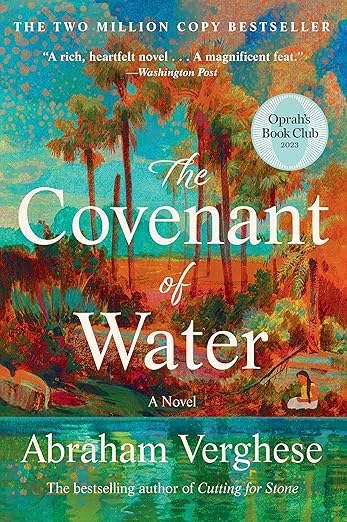
Verghese’s sweeping novel follows three generations of a Christian family in Kerala, India, from 1900 to 1977, all haunted by “the Condition”—a mysterious affliction causing family members to drown. The story begins when twelve-year-old Mariamma arrives by boat for an arranged marriage to a forty-year-old widower, becoming the matriarch known as Big Ammachi.
As decades pass, she witnesses unthinkable changes: India’s transformation from British rule to independence, advances in medicine, shifts in social structures. The novel interweaves multiple storylines, including a Scottish doctor and a Swedish physician running a leper colony, all connected by water’s symbolic presence and the family’s medical mystery.
The interwoven narratives and multi-generational structure offer opportunities for analyzing how family history shapes identity and how individual stories connect to larger historical forces. Verghese, a physician himself, brings extraordinary detail to both the medical elements and the lush Kerala setting, making this particularly appealing for science-minded students. The exploration of healing, forgiveness, and resilience gives students plenty to work with. Fair warning: it’s nearly 750 pages, so this works best for dedicated readers. Content includes child death, sex, and medical procedures.
The Dark Maestro by Brendan Slocumb (2025)
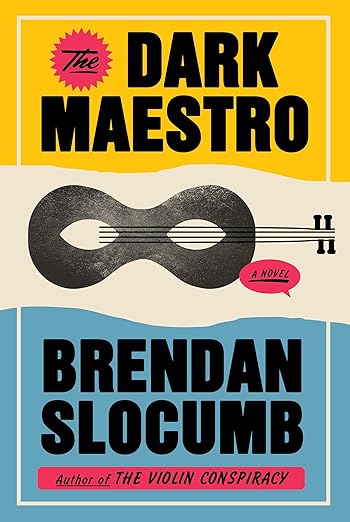
We’ve been fans of Slocumb’s since his breakout novel, The Violin Conspiracy (a previous recommendation). In this story, Curtis Wilson, a cello prodigy from Southeast D.C., has risen from the projects to solo with the New York Philharmonic through talent, determination, and the support of his father Zippy’s girlfriend, Larissa. But when Zippy, a former drug dealer, turns state’s evidence against his bosses, Curtis’s glittering career shatters. The family must enter witness protection to survive, meaning Curtis must give up performing—the thing he loves most.
Unable to share his music with the world, Curtis feels his identity disintegrating. When law enforcement can’t convict Zippy’s former bosses, the family realizes they must take matters into their own hands. Drawing on Curtis’s musical abilities and their collective creativity, they create new identities—including the Dark Maestro, a superhero alter ego that becomes both a comic book and a path to justice.
The novel blends classical music, crime thriller, and superhero origin story while exploring how fathers’ choices affect sons and transformation through creativity. For AP Lit, students can analyze the concept of art as survival and identity reconstruction in the face of silencing external forces. The novel’s genre-blending and alter ego symbolism offer discussion opportunities for character development and metaphor. Content warnings: violence and crime elements.
Good Dirt by Charmaine Wilkerson (2025)
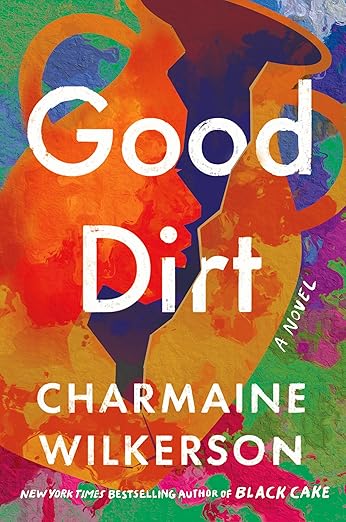
When ten-year-old Ebby Freeman witnesses her brother Baz’s murder during a home invasion, she also watches their family’s most precious heirloom—a centuries-old stoneware jar—shatter. Eighteen years later, the crime remains unsolved, and Ebby, now an adult from one of the only Black families in their wealthy New England enclave, finds herself reeling from another loss when her fiancé abandons her on their wedding day.
Fleeing to France, Ebby begins piecing together not just what happened to her brother, but the deeper story of Old Mo, the jar that connected six generations of Freemans. Through alternating timelines spanning 1803 to 2021, we learn about Moses, the enslaved potter who created the jar in South Carolina, inscribing a secret message that would inspire his brother-in-law Willis to escape. The jar became a symbol of freedom, resilience, and family continuity.
Wilkerson’s novel offers rich analysis opportunities: multiple timelines and perspectives, symbolism (the jar, “good dirt” as both pottery clay and gossip), and how Black families’ stories intertwine with slavery’s legacy. The novel explores grief, forgiveness, and the power of storytelling to offer hope to future generations. Content warnings: violence, death, and discussions of slavery.
Home Fire by Kamila Shamsie (2017)

Shamsie’s modern retelling of Antigone follows the British Pakistani Pasha family as loyalties collide between family and state. Isma, 28, finally pursues her education in America after years spent raising her twin siblings, Aneeka and Parvaiz, following their mother’s death. Their father, a jihadist who died en route to Guantanamo, casts a long shadow.
When Parvaiz, desperate to understand his father’s legacy, is recruited by ISIS and flees to Syria, he quickly realizes his terrible mistake. His twin Aneeka, a law student, becomes romantically involved with Eamonn Lone—son of Britain’s Home Secretary Karamat Lone, a politician who’s built his career rejecting his Muslim background. As Aneeka tries desperately to bring Parvaiz home, political and personal forces collide tragically.
The Antigone connection and shifting perspectives offer opportunities to analyze intertextuality and narrative technique. Shamsie explores where guilt and responsibility lie when family loyalty conflicts with national allegiance, and what it means to belong to two cultures simultaneously. The novel handles complex themes—terrorism, Islamophobia, identity—with nuance, making it particularly relevant for discussions about loyalty and the cost of political decisions on ordinary lives. Content warnings: violence and terrorism.
Wandering Stars by Tommy Orange (2024)
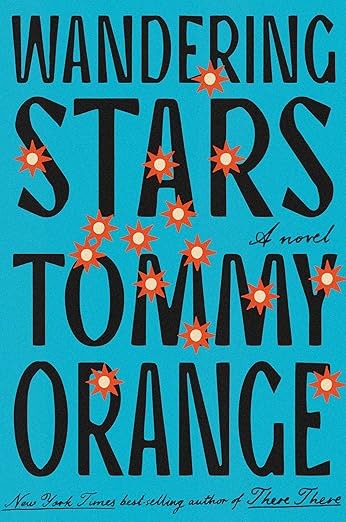
In 1864, a young Cheyenne boy who will call himself Jude Star survives the Sand Creek Massacre. He’s brought to Fort Marion prison in Florida, where Richard Henry Pratt forces him to learn English, practice Christianity, and abandon his culture under the motto “Kill the Indian, Save the Man.” After his release, Jude returns to Oklahoma, discovers whiskey, and eventually has a son, Charles. When Charles is sent to Pratt’s Carlisle Indian Industrial School, he endures brutal treatment from the man who once imprisoned his father.
The novel then jumps to 2018 Oakland, following the Bear Shield/Red Feather family from Orange’s debut There There (an increasingly common AP Literature read). Teenager Orvil Red Feather is recovering from a gunshot wound suffered at a powwow shooting. Doctors prescribe painkillers, and Orvil becomes addicted. His great-aunt Opal tries to keep him and his brothers safe while managing health issues, and his grandmother Jacquie battles alcoholism. Most terrifying is Orvil’s youngest brother Lony, who begins cutting himself after reading online that “Cheyenne meant the cut people.”
Orange traces generational trauma across 150 years, asking what it means to be “the children and grandchildren of massacre.” The novel works as both sequel and prequel to There There but stands alone. Students can analyze how Orange uses structure (shifting between historical and contemporary narratives) to explore epigenetic trauma and how violence echoes across generations. The prose is powerful and incantatory. It’s emotionally demanding but essential reading about America’s ongoing war against Indigenous peoples. Content warnings: violence, profanity, substance abuse, and self-harm.
4 Structurally Adventurous Novels for Readers Who Want a Challenge
Dissolution by Nicholas Binge (2025)
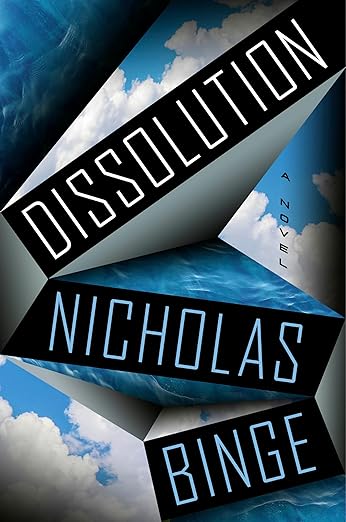
Maggie Webb has spent the last decade caring for her husband Stanley as Alzheimer’s slowly erases their life together. At 83, Maggie feels profoundly alone. Then a mysterious man named Hassan appears at her door with a shocking revelation: Stanley doesn’t have Alzheimer’s. A powerful corporation has been actively removing his memories to hide a decades-old secret from coming to light. If Maggie helps Hassan break Stanley out of the memory ward where he’s been unknowingly imprisoned, they can reverse the damage at a secretive facility called the Lazarus Institute.
Once there, Hassan introduces Maggie to the “memory spade”—experimental technology that allows people to enter another person’s memories. To understand what Stanley is hiding, Maggie must dive into his past, experiencing his memories as if they were her own. Through these memory-journeys, we discover young Stanley as a 1950s Oxford student who made a discovery that challenged the nature of reality itself. A decades-long feud between Stanley and his former research partner has threatened to tear apart the fabric of existence, and someone has been erasing Stanley’s memories to prevent him from revealing the truth.
This sci-fi novel’s non-linear structure mirrors memory’s fragmented nature. Students can examine the frame narrative and how Binge uses structure to explore questions about memory, identity, and objective truth. The novel pairs naturally with Frankenstein for discussions of scientific ethics. Despite heavy concepts, the emotional core—Maggie and Stanley’s love story—makes it accessible for independent reading.
Endling by Maria Reva (2025)
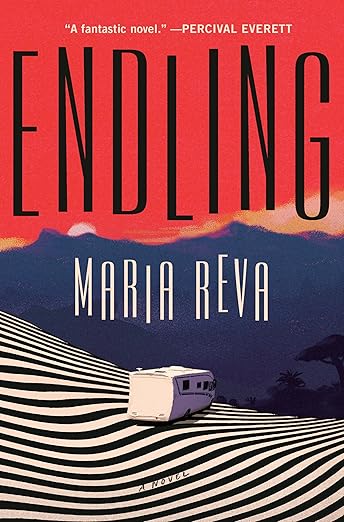
Set in Ukraine in February 2022, Reva’s debut follows three women on a wild journey. Yeva is a malacologist (snail scientist) who funds her conservation work by posing as a “bride” for a Ukrainian matchmaking agency. Nastia and Solomiya are sisters searching for their missing activist mother, who vanished after years protesting the mail-order bride industry. The three women hatch a plan: kidnap a group of Western bachelors and use the crisis to expose the exploitation. They pile the men into Yeva’s mobile lab (an RV filled with endangered snails, including a left-coiling snail named Lefty) and hit the road. Hours into their plan, Russia invades Ukraine.
Then the novel does something extraordinary. Just as you’re invested in the story, Reva shatters the narrative. The story ends, complete with acknowledgments and an author bio. Then the novel resumes—but now we’re following the actual author, Maria Reva, a Ukrainian expat in Vancouver wrestling with her publisher and her grandfather trapped in Kherson. The fictional Maria interacts with her own characters, questions the ethics of writing comedy while her country burns, and offers multiple possible endings for the women and their kidnapped bachelors.
This metafictional spiral is perfect for AP Lit students ready to tackle experimental structure. They can analyze how Reva uses form to explore impossible questions: What stories can we tell during wartime? How do we make art from tragedy? The frame-breaking elements force readers to confront the line between fiction and reality. Despite the structural audacity, it’s remarkably accessible and feels modern. There is some slightly awkward discussion of sex early on, but it’s not graphic and is not the focus as the novel progresses.
Extremely Loud and Incredibly Close by Jonathan Safran Foer (2005)

Nine-year-old Oskar Schell is brilliant, anxious, and devastated. His father died in the World Trade Center on September 11, and Oskar carries a terrible secret: he was home but too afraid to pick up when his father made that final phone call. A year later, searching through his father’s closet, Oskar finds a key in an envelope labeled “Black.” Convinced it’s a message from his dad, he embarks on a quest to find every person with the last name Black in New York City, hoping to discover what the key unlocks.
But the novel’s structure is what makes it extraordinary. Interwoven with Oskar’s present-day narrative are letters from his grandparents, who survived the Dresden firebombing in World War II. His grandfather, traumatized into muteness, writes to the son he never met. His grandmother writes to Oskar about love, loss, and the weight of history. Foer includes visual elements throughout: photographs, blank pages, red pen annotations, and a devastating flipbook of a man falling from the towers that Oskar rearranges so the man flies up instead of down.
This novel offers a masterclass in how structure reinforces theme. Students can analyze multiple narrative perspectives, the use of visual storytelling, and how Foer parallels historical traumas to explore how grief echoes across generations. The experimental formatting isn’t gimmicky; it’s essential to understanding how we make meaning from catastrophe. Content warnings: profanity, sexual references, and non-PC language.
Maya & Natasha by Elyse Durham (2025)
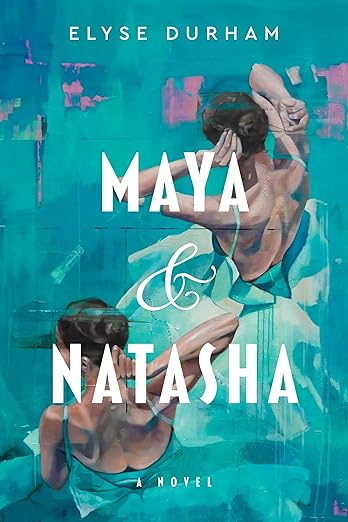
In 1941, during the Siege of Leningrad, a nineteen-year-old prima ballerina dies giving birth to twin daughters. Her best friend Katusha finds the infants wailing beside their mother’s body and escapes on the last train to Tashkent, naming the girls Maya and Natasha. After the war, Katusha raises them at the Vaganova Ballet Academy, training them to follow in their mother’s footsteps as dancers for the prestigious Kirov Ballet.
In 1958, now seniors at the Vaganova, the twins dream of joining the Kirov and touring America. But a new Kremlin law changes everything: due to fears of defection, family members may no longer travel abroad together. The Kirov can only accept one of them. For the first time, the twins—who’ve always done everything together—are forced into direct competition. Maya, long in Natasha’s shadow, finds inspiration from a new dance partner and begins practicing harder than ever. Then one sister betrays the other, altering both their lives forever. Their paths split: one joins the Kirov and experiences the West; the other is cast in an epic Soviet film adaptation of War and Peace.
Durham uses omniscient cinematic POV that swoops across decades, blending real historical figures with fictional characters. The observational distance mirrors the sisters’ emotional distance and Cold War dynamics. For AP Lit, students can analyze how narrative distance affects emotional impact and how Durham explores art versus politics, individual dreams versus collective good, and the cost of ambition in a totalitarian regime.
5 Novels About Love, Loss, and Starting Over
An American Marriage by Tayari Jones (2018)
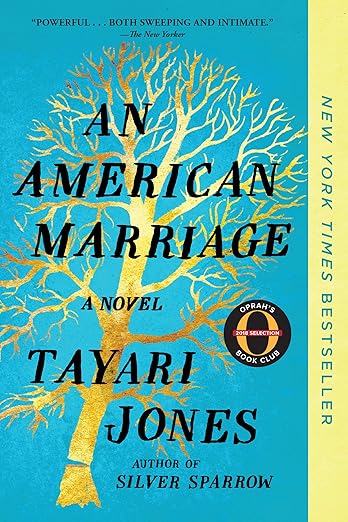
Roy and Celestial are at the beginning of their lives together: married for a year, on the brink of successful careers, and hopeful for the future. But then Roy is accused of a crime he didn’t commit and sentenced to prison, testing the limits of their young marriage. As they both struggle to live in this new and painful reality, they find themselves hurting one another in their failure to understand what the other is going through.
In the meantime, Celestial turns to her childhood best friend Andre, who has always loved her, and when Roy finds himself released from prison and ready to pick up his life where he left off, the three of them must navigate the new people they’ve become and the new lives they’ve created for themselves.
What makes the novel most powerful is how human it is. All three characters are deeply flawed and yet deeply sympathetic, and they find themselves in circumstances most of us can’t fathom. They’re doing the best they can to deal with the hand life has dealt them, and there are opportunities to consider the impact of race, gender, and class as well as what it really looks like to love another person. Content warnings: abortion and incarceration.
Hamnet by Maggie O’Farrell (2020)
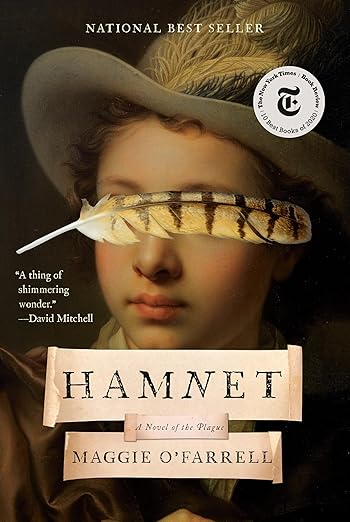
In 1596, eleven-year-old Hamnet searches desperately for help when his twin sister Judith falls suddenly ill with fever and swollen lymph nodes—signs of plague. His father is away in London. His mother Agnes (the woman history knows as Anne Hathaway) is tending her bees. Unable to find the physician, Hamnet collapses on the bed next to Judith, and when Agnes finally returns, both twins are ill.
Hamnet has made a pact with death: he cannot bear for Judith to die while he lives, so he trades places with her, swapping clothes and willing himself to be death’s victim. Agnes wakes to find Hamnet dying, not Judith, and there’s nothing she can do. The novel alternates between this devastating timeline and flashbacks showing how Agnes—an eccentric woman with healing gifts and a tame kestrel—fell in love with a young Latin tutor. Four years after Hamnet’s death, the husband writes a play called Hamlet—where the father dies instead of the son.
O’Farrell never mentions Shakespeare’s name, helping readers see him as a husband and father rather than a literary icon. The novel (likely of higher interest thanks to the 2025 film) offers rich analysis opportunities: grief and its aftermath, marriage under strain, the relationship between art and loss. The alternating timelines demonstrate how writers manipulate time to deepen emotional impact. The novel explores: How does tragedy transform into art? Can creating something beautiful justify using real pain as material? Fair warning: you’ll need tissues.
Homeseeking by Karissa Chen (2025)
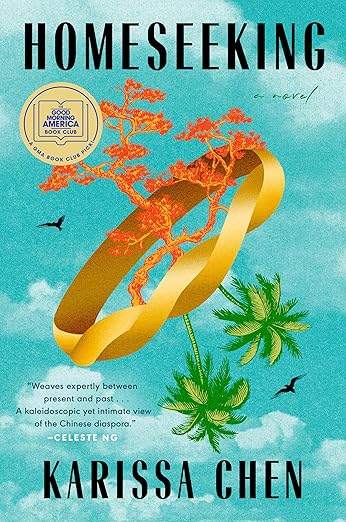
In 1947 Shanghai, Haiwen secretly enlists in the Nationalist army to save his brother from the draft, leaving behind his soulmate Suchi with only his violin and a note: “Forgive me.” They’d been inseparable since age seven, when Suchi was drawn to the sound of Haiwen playing violin. Their childhood friendship blossomed into deep love, and they’d planned their entire future together. But war tears them apart. Haiwen ends up in Taiwan with other Nationalist soldiers, expecting to return soon once they retake China. Suchi flees to Hong Kong to help her father with his bookstore, an excuse to get her and her sister to safety.
Sixty years later, in 2008 Los Angeles, recently widowed Haiwen (now going by Howard) is buying bananas at 99 Ranch Market when he sees Suchi (now Sue) for the first time since Shanghai. To him it feels like a second chance, but Suchi has survived by refusing to look back. The novel follows their separate journeys through six decades of tumultuous Chinese history—from Hong Kong’s song halls to Taiwan’s military camps to New York’s bustling streets to sunny California. The structure is ingenious: Haiwen’s timeline moves from present to past while Suchi’s moves from past to present, meeting in the crucible of 1947 when everything changed.
Chen’s debut explores how war and displacement shape identity, what “home” means when you can’t return to your homeland, and whether love can endure across time and distance. Students can analyze the alternating timeline structure, how political upheaval impacts individual lives, and themes of memory, regret, and the immigrant experience. Inspired by Chen’s grandfather’s story of being barred from China for decades, the novel feels deeply personal and authentic.
River Sing Me Home by Eleanor Shearer (2023)
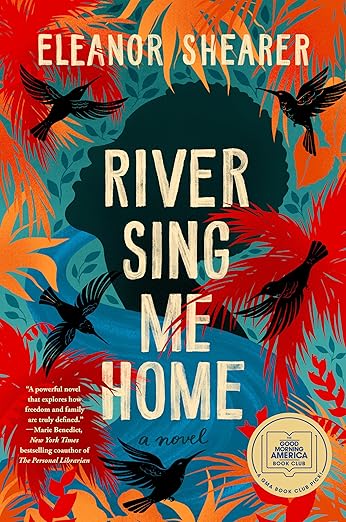
In 1834, the master of Providence plantation in Barbados announces that the king has abolished slavery—but in the next breath declares that his former slaves are now “apprentices” who must continue working for him for six more years. They cannot leave. Rachel, who was born into slavery and has survived the loss of five children sold away from her, decides she cannot wait. That night, she runs. Her search for her children—Mary Grace, Thomas Augustus, Micah, Cherry Jane, and one she never got to name—takes her from Barbados through the forests of British Guiana and across the sea to Trinidad.
The journey is grueling and dangerous, but Rachel is driven by an unshakable conviction: a mother cannot be truly free without knowing what became of her children. Along the way, she meets other formerly enslaved people who help her, each with their own definitions of freedom. She finds Mary Grace working in a dress shop in Bridgetown. Thomas Augustus has created a liberation village deep in the Guiana jungle. Micah is dead. The search becomes both a physical journey across the Caribbean and an emotional reckoning with what freedom really means.
Inspired by true stories of mothers who searched for their stolen children after abolition, Shearer’s debut explores resilient maternal love and the illusory nature of “freedom” during this historical period. Students can discuss the difference between legal freedom and true liberation and the various ways people resist oppression. The prose is lyrical without being flowery, making it accessible for independent reading while sophisticated enough for analysis. Content warnings include slavery’s brutality, though Shearer focuses more on Black characters’ humanity, resilience, and love than on graphic violence.
What Happened to the McCrays? by Tracey Lange (2025)
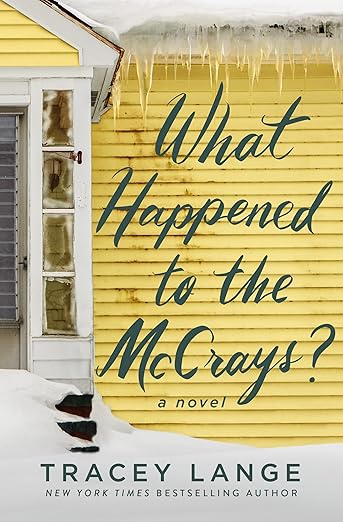
When Kyle McCray learns his father suffered a stroke, he reluctantly returns to Potsdam, New York—the small town he abandoned two and a half years earlier, leaving behind his job, his friends, and Casey, his wife of sixteen years. Casey, a beloved middle school teacher, makes clear she wants him gone. But helping his father means living across the street from her, forcing both to confront unresolved pain.
When Casey needs help coaching the struggling middle school hockey team, Kyle—a former high school hockey star—reluctantly agrees. As they work together, the novel slowly reveals through alternating timelines what shattered their marriage: a house fire involving Casey’s brother Wyatt, Kyle’s moment of paralysis, and its devastating aftermath that the community blamed Kyle for.
We initially weren’t sure students would be interested in a novel exploring marriage conflict, but much of the story focuses on Kyle and Casey’s teenage relationship, making it a great option for romance-lovers that falls somewhere between Jane Austen and Colleen Hoover. Lange examines grief, forgiveness, and how small-town relationships trap people in past identities. The dual timeline structure creates natural opportunities for analyzing how past actions haunt the present and whether people can truly start over. Content warnings: suicide as backstory.
2 Novels Describing a Dystopian Future
Beautyland by Marie-Helene Bertino (2024)
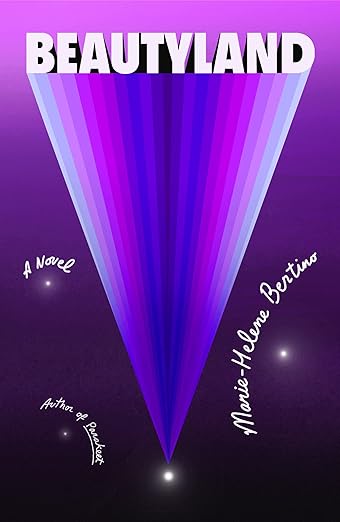
Adina Giorno is born in 1977, the exact moment Voyager 1 launches into space. She’s tiny and jaundiced, but more importantly, she’s actually an alien, sent from a distant planet to observe and report on human life. At age four, Adina is “activated” and begins receiving transmissions from her extraterrestrial superiors through lucid dreams. Her mother salvages a fax machine from the trash, which Adina uses to send reports back to her home planet about the terrors and surprising joys of human existence.
Growing up in Northeast Philadelphia with her single mother, Adina struggles with feeling different and alone. She finds comfort in small wonders—visiting her mother’s favorite store (called Beautyland), watching fish at aquariums, studying Carl Sagan’s ideas about intelligent life. She befriends Toni, a fellow Italian-American girl, and both struggle to fit in. As Adina moves through childhood and adolescence, she yearns for connection both with her alien family and with humans on Earth. The novel follows her into adulthood as she navigates depression (which she calls “Something Else”), realizes she’s asexual, pursues writing, and eventually faces a difficult question: Should she keep her identity secret or share her transmissions with the world?
Though framed as speculative fiction with an alien protagonist, Beautyland is really about the universal experience of alienation—feeling like an outsider, struggling to understand social interactions, questioning whether anyone truly sees you. Students can explore the metaphor of alien-ness (is Adina actually an alien or does she just feel that way?), discuss themes of depression and neurodivergence, and analyze how Bertino uses humor to critique contemporary life. The prose is concise and lyrical, perfect for discussions about voice and how form reflects content.
The Light Pirate by Lily Brooks-Dalton (2022)
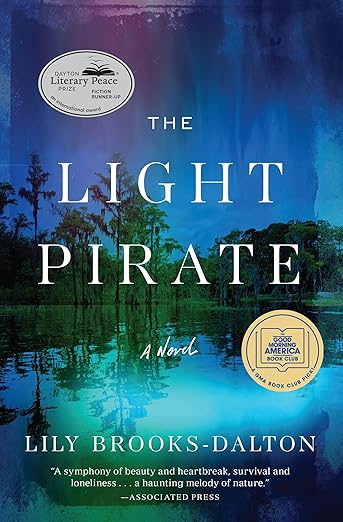
Climate change has not been kind to the United States, and to Florida in particular. Ravaged by hurricanes, the state is essentially disappearing as the tides rise and people flee to other parts of the country.
As Hurricane Wanda bears down on the small town of Rudder, one family prepares for the storm: Kirby, his new wife Frida, pregnant with their first child, and his children from his first marriage, Lucas and Flip. The family has plenty of its own burdens, tensions, and anxieties, and Frida goes into labor just as the hurricane hits, leading to an unimaginable tragedy. But Wanda, Frida’s daughter, survives and carries something unusual with her—a mysterious connection to water and light.
The novel is told in four parts that span Wanda’s life from birth to old age. As Florida is gradually reclaimed by nature and eventually abandoned by the federal government, Wanda learns to adapt to a rewilding landscape, finding family in unexpected places and discovering what it means to survive in a world that’s fundamentally changed.
Brooks-Dalton paints a believable picture of what a world threatened by climate change could one day look like while keeping human faces at the center. The gorgeous prose, unusual structure, and storm symbolism give students plenty of opportunities to hone their literary analysis skills. It’s straightforward and relatable, making it an excellent independent reading option for AP students interested in climate fiction. Content warnings: death and environmental disaster.
Independent reading books for AP Literature should challenge students without overwhelming them, expose them to new perspectives and ideas, and build the analytical skills they’ll need for college and beyond. These 22 novels strike that balance—contemporary enough to feel relevant, sophisticated enough to reward close reading, and diverse enough to ensure every student finds something that speaks to them.
Looking for more ways to support independent reading in your AP classroom? Check out our end-of-novel book project for a creative alternative to essays, or grab our independent reading bundle with check-in activities and assessment tools that actually work.