
Short Stories for Students: 14 Classroom-Tested Picks You Haven’t Tried Yet
Short stories are an English class staple, and most of us have a list of go-to short stories for students that we know work great. They fit our curriculum, our students like them, and we’re comfortable teaching them.
But sometimes we need fresh options. Maybe you’re building a dystopian unit and need another title or two. Maybe your textbook is feeling a little heavy on the “old white male” perspective. Maybe you just need to break up the routine after teaching “The Lottery” for ten years in a row. Or maybe you’re looking for a story that works as a quick fill-in when you have an awkward day in your calendar.

Whatever your reason is, we’ve got you covered with today’s roundup of short stories for students. We keep a running list of short stories that other English teachers, especially AP Lit teachers, use in their classrooms. All of today’s recommendations come from that list.
These stories may not replace your beloved standards (or maybe they will!), but they’re proven to work well with students. Some are contemporary, some are a little older. What they do have in common is that real teachers have found success with them.
We’ve grouped these short stories for students thematically—from dystopian fiction to marginalized voices to experimental structures—to make it easier for you to find the refresh option your curriculum needs. Whether you’re looking for a one-day lesson or a deep-dive text study, you’ll find classroom-tested options here.
What Makes These Stories Work
While we keep a running list of classroom-tested short stories, we only recommend short stories that we’ve read and feel confident will work in most classroom settings.
These short stories for students come from teacher communities, AP Lit teacher recommendations, and curriculum guides. This means you know they’ve worked for someone, even if they don’t work for all students.
While not all contemporary, these stories still feel fresh and relevant (sometimes eerily so), and most of them are classroom-safe in terms of content and language. The list includes a mix of voices and perspectives as well as a range of lengths: some are perfect for one-day activities, while others allow for deeper study.
With 14 options to choose from, we’re confident you can find something here to freshen up your go-to short story list.
14 Short Stories for Students, Grouped Thematically
Dystopian and Speculative Fiction
These five short stories explore dystopian themes and speculative “what if” scenarios—perfect for units on social commentary, satire, or pairing with longer dystopian texts.
“Harrison Bergeron,” by Kurt Vonnegut
“The year was 2081, and everybody was finally equal.” Sounds great, right? Unfortunately, this equality comes at a cost: any individual difference, especially in appearance or intelligence, must be modified (or “handicapped”). Beautiful people hide their faces behind masks; intelligent people have their thoughts regularly interrupted by a blaring alarm. Harrison Bergeron is no ordinary human, and so he is encumbered by handicaps and considered extremely dangerous. When he escapes from jail, he interrupts a television program and demands a dance with one of the ballerinas, but the moment of beauty cannot be allowed to go on for long.
Vonnegut’s story is an excellent introduction to the dystopian genre, offering opportunities to discuss what truly constitutes equality and what is lost in a society without individual differences. The story is relatively short, making it accessible to a wide range of students. It also tends to generate strong opinions, which makes for excellent class discussions about the costs of forced equality.
“Examination Day,” by Henry Slesar
The Jordans’ son Dickie has just turned 12, which means it’s time for his Government Intelligence test. Despite the Jordans’ efforts to reassure their son, the tension is palpable, reflected even in the gloomy weather. Students will be surprised (and likely outraged) when they learn the outcome of Dickie’s test. (Major Divergent vibes, which makes it an easy sell to students.)
Another story that’s short and accessible to a wide range of students, “Examination Day” presents opportunities to discuss the controls necessary to maintain a dystopian society. Suspense, setting, and mood are key literary devices, and the story can be taught in a single class period, making it perfect for those awkward calendar gaps or as an introduction to dystopian thinking.
“A Sound of Thunder,” by Ray Bradbury
Eckels takes a time safari to a prehistoric world, eager to shoot a dinosaur under the guidance of experts. The trip is exciting and dangerous, and the Safari Guides frequently remind time travelers to stay on the path: any change to the environment, however small, could set off a chain reaction of events that has catastrophic consequences for the future they hope to return to. But when face-to-face with a Tyrannosaurus Rex, that single rule proves more difficult to follow than Eckels expected.
Full of imagery, Bradbury’s story offers plenty of excitement and introduces the famous butterfly effect. Whether or not students buy the butterfly effect, the story sparks discussions about consequences, fate, and how individual choices matter (or don’t) in the grand scheme of time.
“There Will Come Soft Rains,” by Ray Bradbury
Bradbury’s second entry on the list is set on August 4, 2026. The Featherstones’ technologically advanced house runs smoothly through its daily routine, even though the Featherstones are eerily missing and the neighborhood is a pile of post-apocalyptic rubble. This, however, is the day the house dies.
Named for a poem included in the middle of the story, Bradbury’s story highlights the utter indifference with which both nature and technology treat human lives. It appears as if life on Earth has ended, yet both nature and technology continue as if nothing is amiss. The background of the apocalypse also raises questions about the costs of technological advancements—questions that feel even more relevant today than when the story was actually written. The embedded poem offers a great opportunity to discuss how authors use intertextuality to deepen meaning.
“Of Missing Persons,” by Jack Finney
In a world where many of us feel a sense of dread when we pick up our phones to see what’s happening in the world, we can totally relate to the narrator’s desire to escape to Verna, another world where life seems simpler and people seem happier. Yet that escape is more elusive than it seems: does the narrator truly have the faith necessary to live in a better world?
While this one requires more patience and careful reading than the others on this list, Finney’s short story is perfect for helping students practice identifying and discussing complex themes. The setting may feel outdated, but the desires that drive the protagonist are just as relevant today as they were when the story was written.
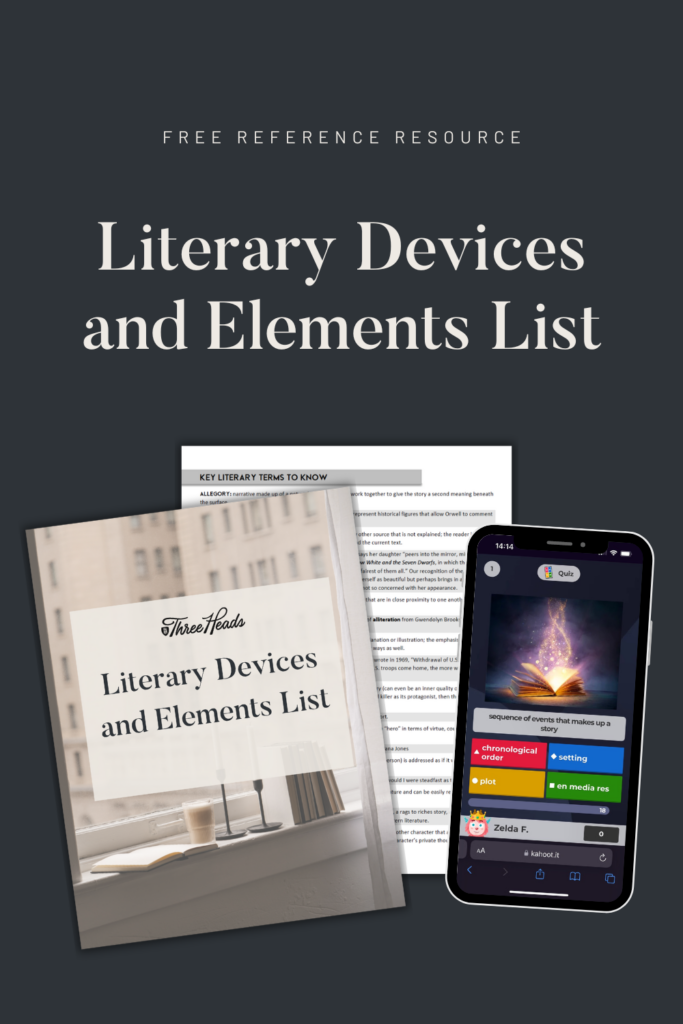
Free LITERARY TERMS LIST!
Sign up below to join the free resource library.
Marginalized Voices and Experiences
When you need short stories for students that center marginalized voices and experiences—from systemic oppression to cultural displacement—these options offer powerful perspectives. They range from historical trauma to contemporary immigrant experiences, giving students windows into different forms of othering and injustice.
“The Censors,” by Luisa Valenzuela
Valenzuela’s story takes place in 1960s–1970s Argentina, when it, like many other Latin American countries, was ruled by a military dictator and censorship was prevalent. Juan wrote a letter to Mariana in Paris, and when he is unable to sleep out of fear of what will happen when the censors read it, he gets a job as a censor, hoping to intercept his own letter. Over time, however, Juan becomes what he once feared most.
We really enjoyed this story. Yes, it’s a window into a different time and place and a great example of irony. But more importantly, it provokes reflection on how our day-to-day roles and experiences shape us. Juan is much like the “prison guards” in Zimbardo’s famous Stanford Prison Experiment, who easily adopt attitudes and behaviors they never would have imagined. The story also offers opportunities to discuss not only the slippery slope of censorship—once you start looking for problems, you see them whether they’re there or not.
“The Flowers,” by Alice Walker
In only two pages, ten-year-old Myop loses her childhood innocence. As she wanders the woods behind her family’s cabin, collecting flowers on a beautiful summer morning, she encounters first a corpse, then the rotted remains of a noose. Walker’s final sentence, “And the summer was over,” is powerful in its use of understatement, which may remind students of Countee Cullen’s “Incident.”
Walker’s use of imagery, juxtaposition, and symbolism to describe Myop’s loss of innocence offers rich opportunities for practice with literary analysis. Because the story is only two pages, it’s perfect for an introductory close reading lesson, a supplement to a larger unit exploring social justice themes, or a single-day lesson to fill in a calendar gap.
“The Welcome Table,” by Alice Walker
Titled after a verse of a Spiritual, “The Welcome Table” describes an old woman’s experience being forcibly removed from a white church, only to encounter Jesus walking along the highway.
Rich in irony, the story explores the all-too-common hypocrisy of evangelicals who claim to love Jesus while actively participating in the oppression of marginalized groups. The story is incredibly well-crafted, and unlike many stories heavy in irony, it is accessible to a wide range of students. Students often have strong reactions to the church members’ behavior, which makes for powerful discussions about performative versus genuine faith.
“Tony’s Story,” by Leslie Marmon Silko
When Leon returns from the army to the pueblo, Tony is happy to have him back. But a racist encounter with a state cop disrupts the men’s lives, highlighting differences in their beliefs about modern justice shaped by their experiences on and off the pueblo.
Students rarely explore racial justice and police brutality from the Native American perspective, making this an important opportunity to widen their view of the world. It’s also rich ground for character analysis—students can examine how Leon’s time away from the pueblo versus Tony’s traditional beliefs lead them to drastically different responses to the same traumatic encounter.
“The Thing Around Your Neck,” by Chimamanda Ngozi Adichie
Akunna moves from Nigeria to America when her uncle enters her name in a lottery for an American visa, but her experience in America is far from the dream many have of it. Life is challenging, and she regularly encounters racism, ignorance, and arrogance. Even when she begins a relationship with a white man who is familiar with Nigeria, she feels the divide between their cultures and longs for home.
While not appropriate for younger students (there are a couple of references to sex, including an unwanted advance from an older family member), the short story is an excellent opportunity to introduce older students to a popular contemporary author beyond her well-known TED Talk. Adichie’s novels appear on recommended AP Literature reading lists, but their length and adult content may make teachers reluctant to assign them in some school contexts.
This short story addresses similar themes, especially to Americanah, in a more condensed format; the two references to sex are less descriptive than some of her novels. For teachers wanting to introduce Adichie’s work before assigning a full novel, this story works as an excellent “test run” to gauge student maturity and interest.

Unique Structures and Perspectives
Looking for short stories for students that challenge traditional narrative structure? These options offer experimental formats and unusual perspectives that spark great discussions about craft.
“Girl,” by Jamaica Kincaid
Featured heavily in the Course and Exam Description for AP Literature and Composition, Kincaid’s one-page short story presents readers with a barrage of orders and lessons presumably directed at a young girl.
The piece makes an excellent introduction to prose analysis: the length allows for deep analysis within one class period, and the use of stream of consciousness and second-person point of view requires students to explore challenging literary devices in a manageable text. The barrage of gender expectations is also likely to evoke strong opinions from students, leading to a rich discussion. Because it’s only one page, it’s also perfect for those awkward calendar gaps or as a low-prep substitute lesson that still has real academic value.
“Ordeal by Cheque,” by Wuther Crue
We see this text recommended frequently by AP Lit teachers at the beginning of the school year. Rather than traditional prose, the text includes a series of checks (in an age of online banking, you may need to teach students what a check is!) that have been filled out, including the memo line. Reading the checks in order allows you to piece together a story about the lives of the family writing the checks.
This is an excellent way to introduce close reading and interpretation to students, so we see why it’s a popular beginning-of-the-year activity. Students must make inferences about the characters’ lives based on the minimal information provided to them; the unique format makes this exercise feel more like solving a puzzle than analyzing literature, which is exactly why students engage with it. There’s also no clear “right” answer, so there’s plenty of room for students to argue over the best interpretation, building their confidence in literary analysis before tackling more complex texts.
Loss, Death, and Grief
These contemporary short stories for students tackle loss, death, and grief in strikingly different ways. One examines a parent’s deepest fear in the aftermath of a car accident, while the other contemplates the end of the world. Both invite students into challenging conversations about mortality and meaning.
“Chicxulub,” by T.C. Boyle
The narrator and his wife, Maureen, are about to enjoy a quiet night together while their daughter is out with friends, only to be interrupted by a call from the hospital telling them their daughter is in surgery following a car accident. As the couple anxiously waits to learn their daughter’s fate, the narrative is interwoven with descriptions of Chicxulub, the asteroid that caused the extinction of the dinosaurs.
This is our favorite story in the roundup, and it’s one that we think students will enjoy and be moved by. The focus on parents and a teenage child out with friends feels incredibly fresh and relatable, and the paragraphs about the asteroid juxtaposed with the parents’ worry evoke reflections on the sudden catastrophe of death and accidents as well as the contrast between how big personal moments feel to us and how small those moments are in the grand scheme of history. It’s an excellent pairing with “There Will Come Soft Rains” if you’re exploring themes of human insignificance, or it works beautifully in a unit on parent-child relationships.
Content note: The story includes profanity and opens with the parents preparing for an intimate evening together (not graphic, but clear in intent).
“You, Disappearing,” by Alexandra Kleeman
Instead of the anticipated apocalypse, the narrator is living through “The Disappocalypse,” where things suddenly and inexplicably disappear from the world. The disappearances start small but eventually disrupt daily life; by the story’s end, people are disappearing.
The power of this story for use in the high school classroom is the narrator’s response to the disappearances around her, including, ultimately, her own memory and life. The story explores how people cope with loss and how it feels to watch the world slowly (and literally) disintegrate around you. Younger students might struggle with the abstract concept, but older students—especially those who’ve experienced significant loss or anxiety about the future—will have a lot to say.
No matter what your short story unit needs, we hope one of these 14 short stories for students fits the bill. With differing lengths, themes, and time periods, the list gives you a lot of options, all proven classroom successes. As teachers, we believe that meeting students where they are means having options, and we encourage you to try out 1–2 stories that fit your current unit! If you’re looking for more short story recommendations, check out our comprehensive guide to teaching with short stories or our list of 11 short stories high school students will actually enjoy.
short story recommendations




And, of course, we’d love to hear what you try out! Connect with us at [email protected] or on Instagram @threeheads.works.
If you’re looking for short-story-related resources, consider checking out our mini-unit walking students through the steps of writing a literary analysis essay: it pairs particularly well with the AP Literature prose units.


